


Kinetic Lines in Dogs: What They Are and Why They Matter
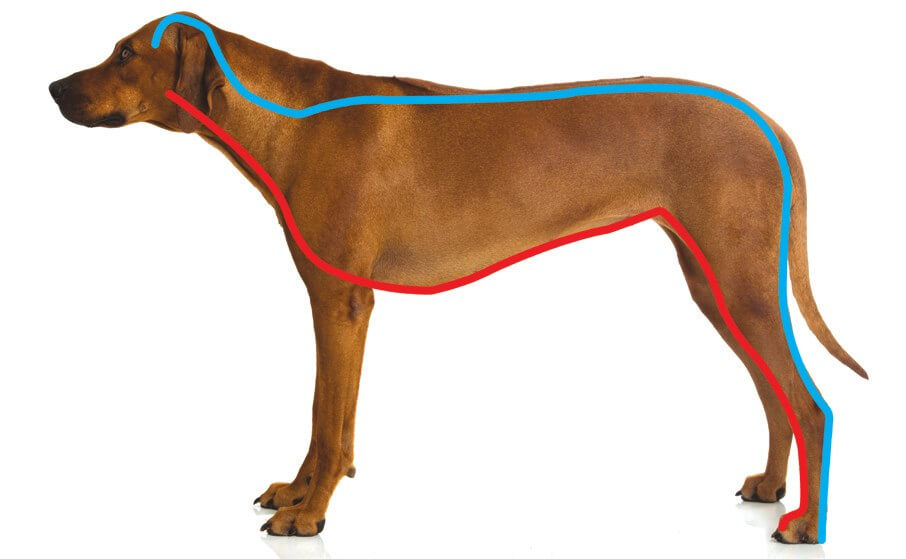
All the structures of the body are connected by fascia. Muscles rarely work in isolation: their myofascial expansions link up with other muscles and structures to form chains involved in similar movements. This idea was first described in humans in the book Anatomy Trains by Tom Myers, and has since also been identified in horses and dogs. A lesion in one part of a kinetic line can affect the other structures along that same chain.
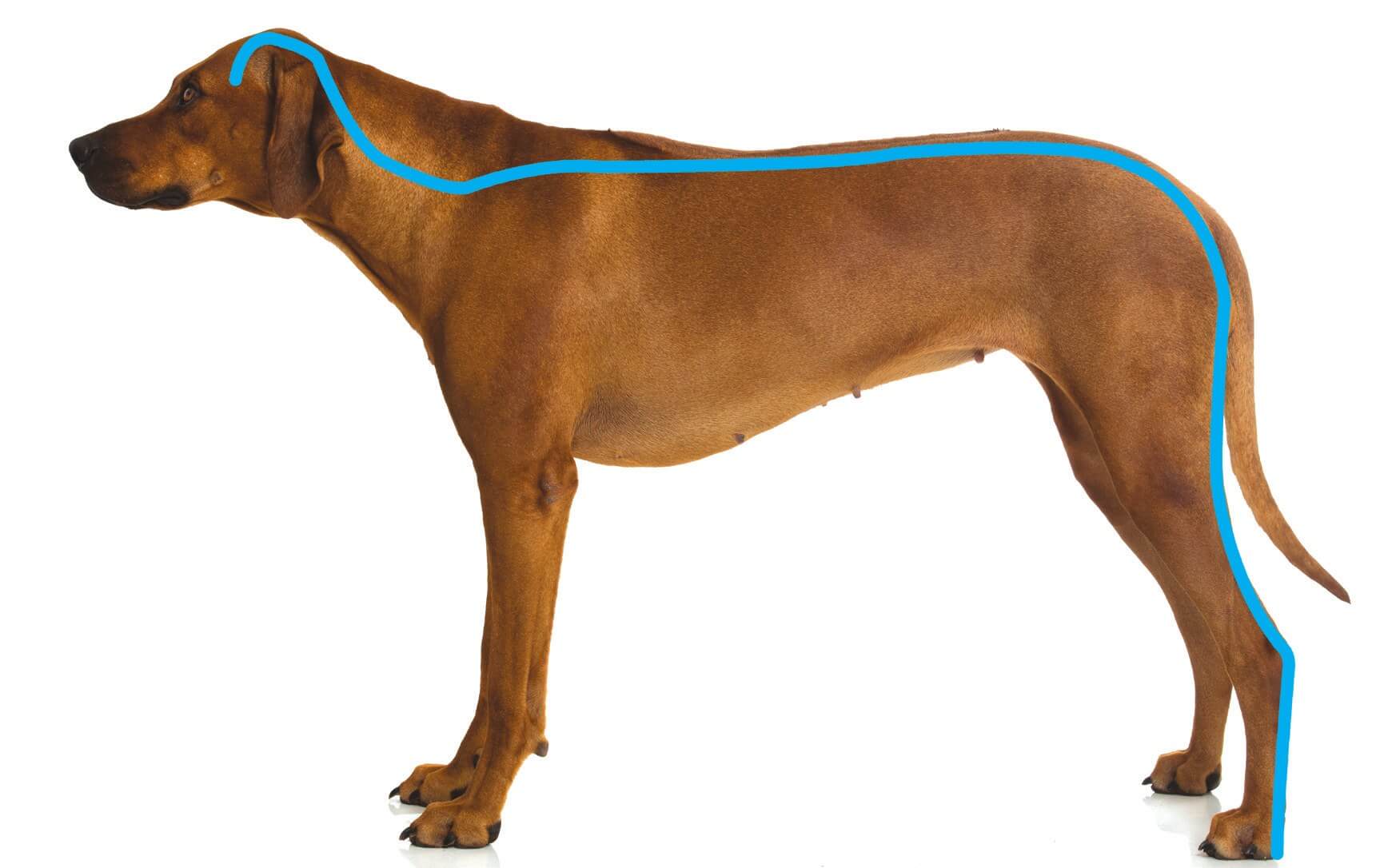
The Superficial Dorsal Line
The Superficial Dorsal Line runs from the temporal region of the head, along the back, down to the plantar side of the hind limb digits – connecting all the structures in a dorso-caudal-plantar direction.
A lesion anywhere along this line can affect the rest of the chain. For example, scar tissue from back surgery can make part of the line less elastic, increasing tension elsewhere along it. This often shows up as a shortened line: reduced ability to lower the neck, or a limited hindlimb protraction. The line can also be compromised by issues such as common calcaneal tendon injuries, gastrocnemius tendinopathy, or thoracolumbar disc herniation.
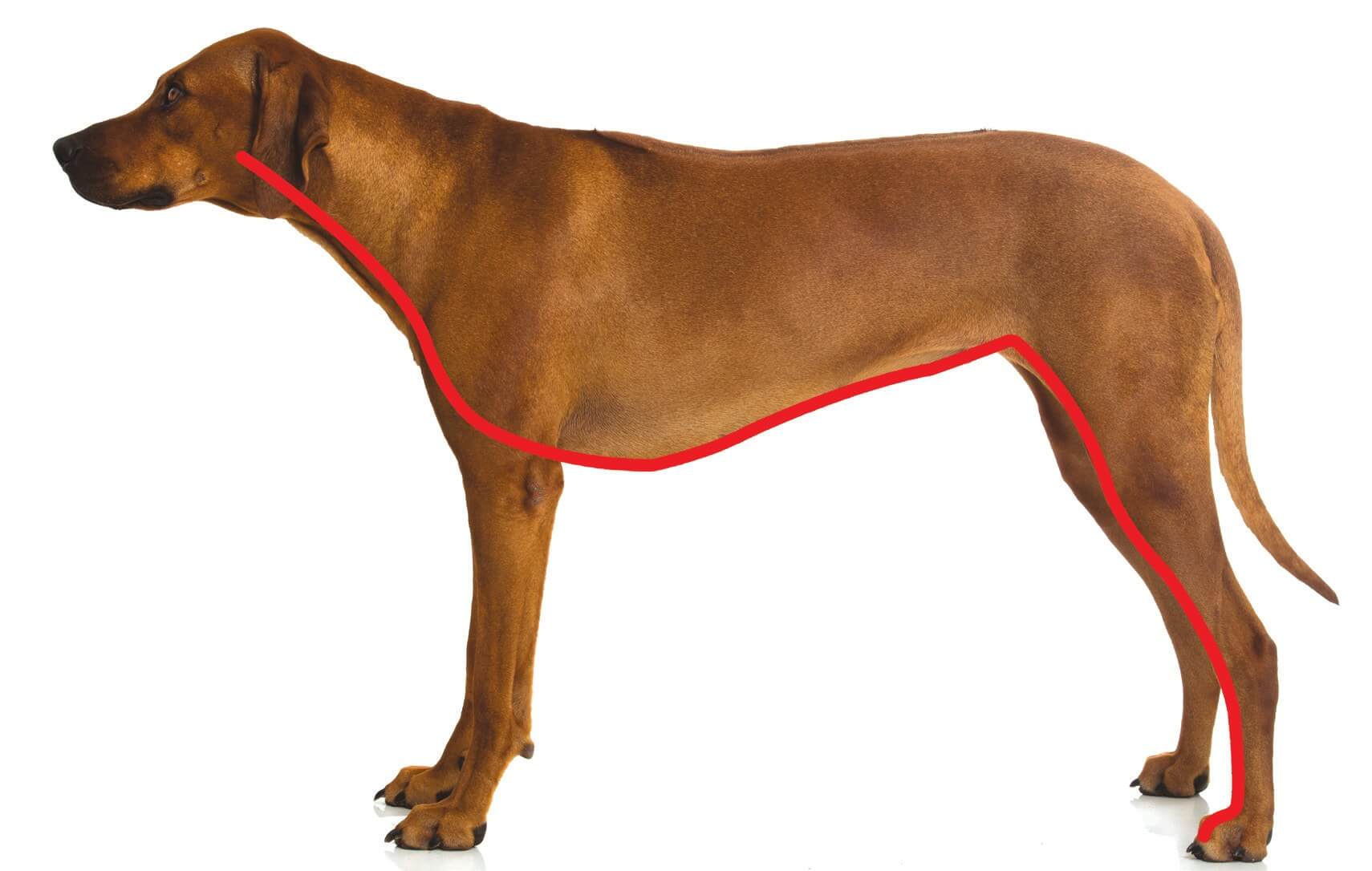
The Superficial Ventral Line
The Superficial Ventral Line runs in a ventro-cranial-dorsal direction, connecting the area of the mandible to the dorsal part of the hind limb digits.
This line can be compromised by, for example, abdominal surgery, neck lesions from collars, or pectoral pressure in dogs that pull against a harness. An abdominal surgical scar can restrict the retraction phase of the hindlimb stride, while neurological weakness along this line may show up as reduced tone in the cranial thigh muscles and dragging of the hind limbs.
Why this matters for taping
Understanding these lines helps explain why a problem in one area can show up as stiffness or weakness somewhere else entirely. A dog with an arched back and lowered neck, for example, often has an elongated dorsal line and a shortened ventral line – both chains need to be addressed, in opposite directions, to restore balanced movement.
In practice, kinesiology tape can be applied directly along a compromised line to relieve pain and create lines of force through scar tissue, or applied to the opposing (antagonist) line to indirectly rebalance the two chains. This concept underpins several of the individual applications described elsewhere on this site – for example, supporting the cranial thigh muscles to improve proprioception, or using crisscrossed tape over a scar to restore movement to the fascia.
More information:
Please note that applications provided on our website are not clinically proven. All mentioned applications are based on extensive evaluation and case studies with licensed veterinarians and/or canine physiotherapists. Always have the underlying cause of lameness diagnosed by a veterinarian before applying tape.
Attention: Mentioning source is mandatory, when using the content on this page.