


Kinesiology Taping for Muscles in Dogs: Reference Guide
Kinesiology tape can be applied over specific muscles to help facilitate contraction in weak, hypotonic muscles, or to promote relaxation in tight, hypertonic muscles. The direction of application determines the effect: taping from origin to insertion facilitates contraction, while taping from insertion to origin promotes relaxation.
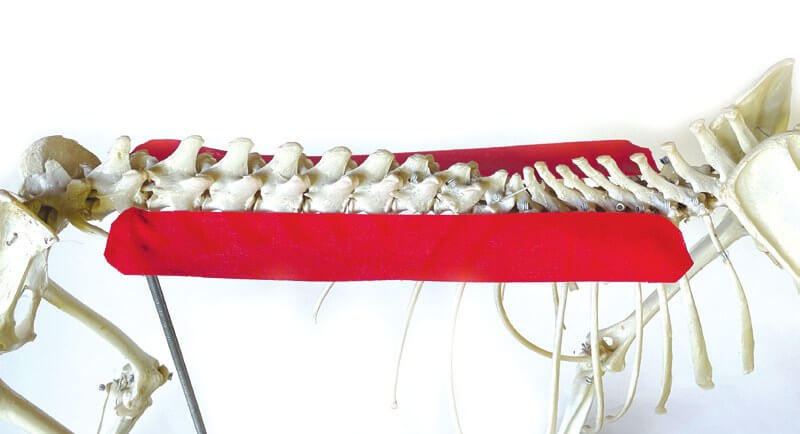
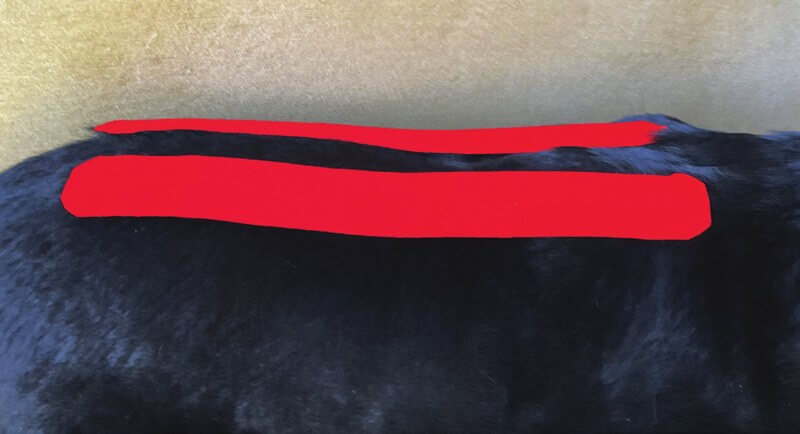
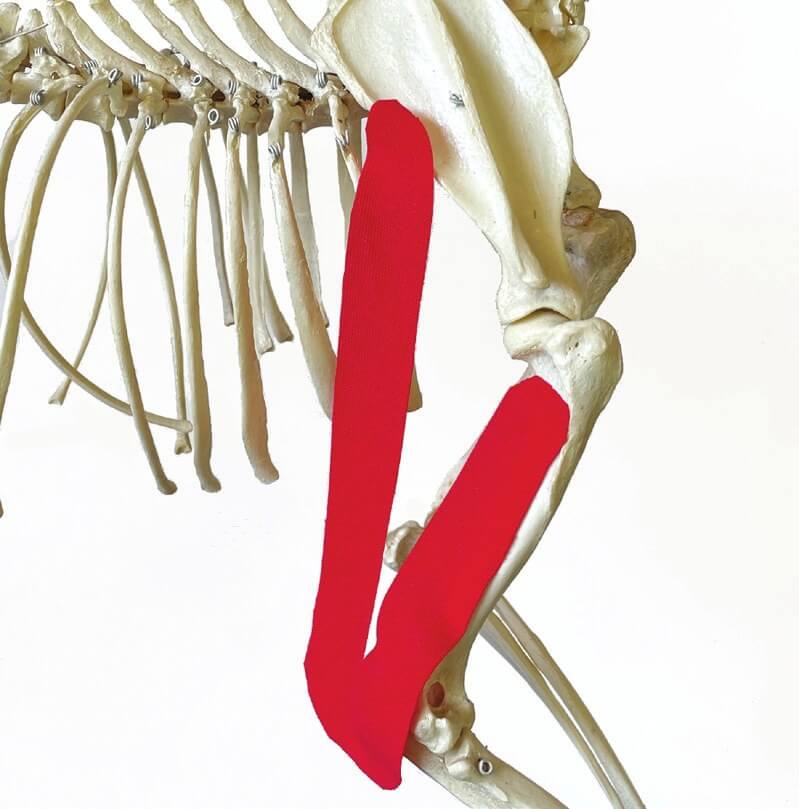
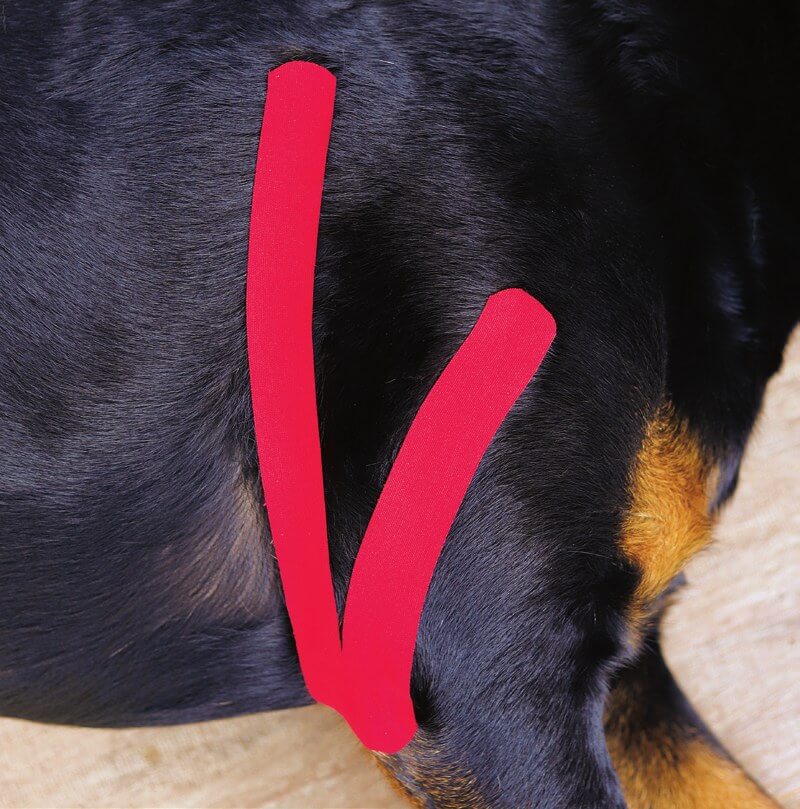
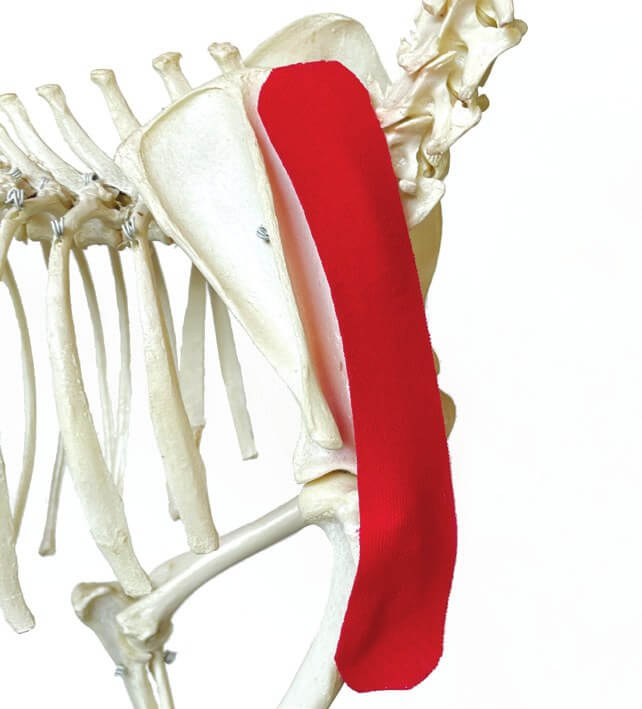
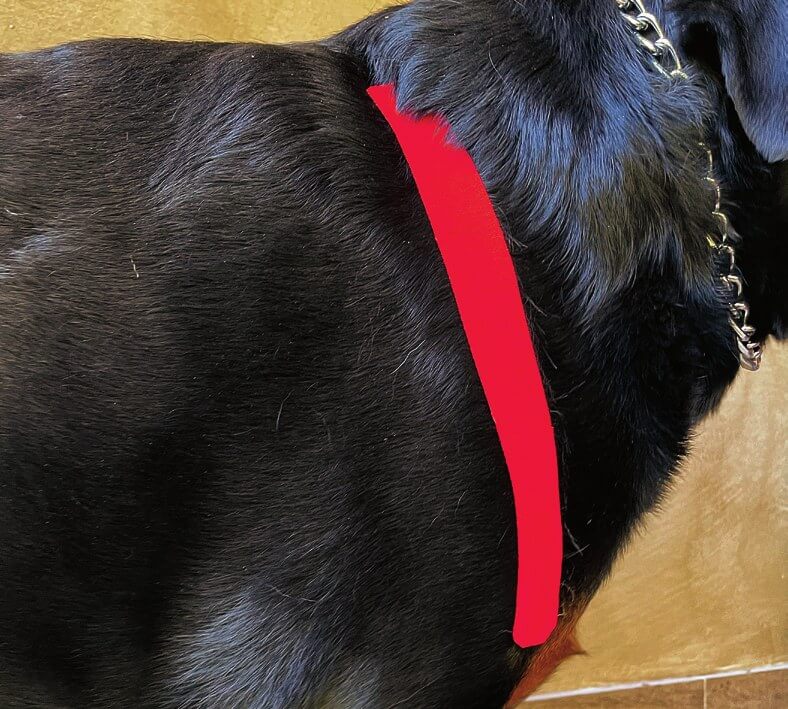
This page is a visual reference for some of the muscles most commonly taped in dogs. For each one, the tape is shown positioned on a skeleton to illustrate the muscle’s path, alongside a photo of the application on a dog.
Popular products for muscle taping
-

VetkinTape® Soft Touch Scissors
€12.95In stockAdd to cart -
VetkinTape® 6cm
€13.95In stockSelect options This product has multiple variants. The options may be chosen on the product page -
VetkinTape® 3cm
€14.95In stockSelect options This product has multiple variants. The options may be chosen on the product page -
VetkinTape® Canine Intro Offer
€69.95In stockAdd to cart


Erector spinae
Runs along either side of the spine. Taping here is commonly used to support the back or facilitate the postural muscles running along the vertebral column.
Brachiocephalicus
Runs from the skull along the side of the neck. Taping this muscle can support head and neck posture or facilitate its action in advancing the forelimb.
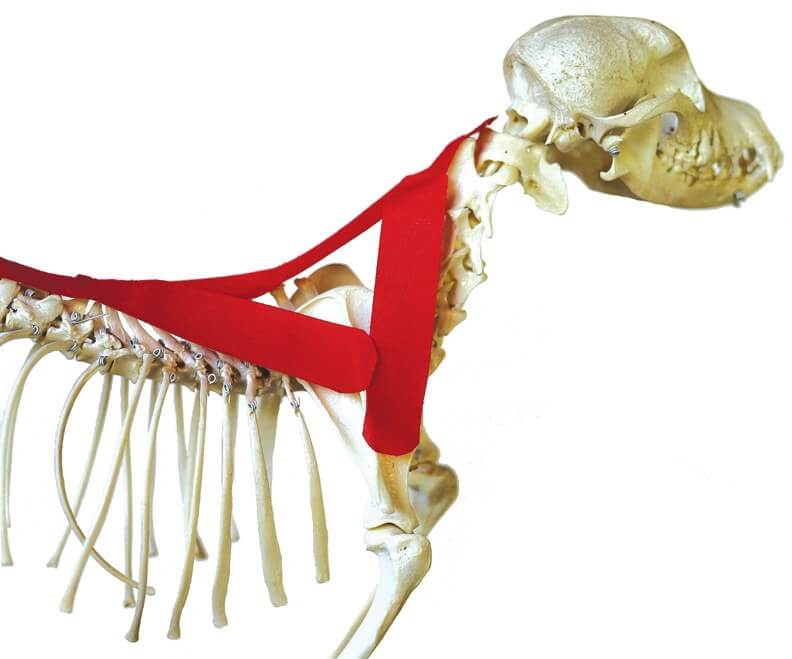
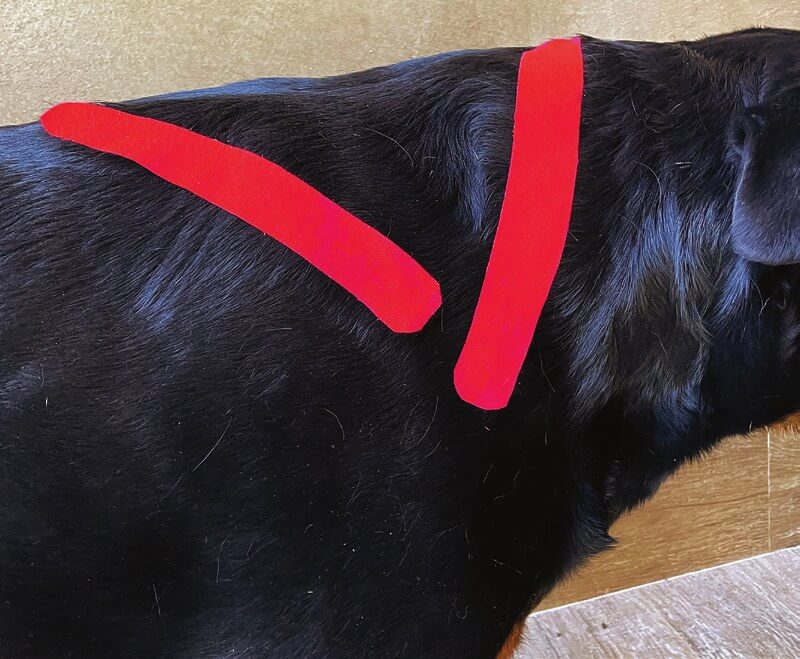
Trapezius (cervical and thoracic parts)
Spans from the neck and upper back to the shoulder blade in a V-shaped pattern. Taping supports shoulder stability and posture of the neck and upper back.
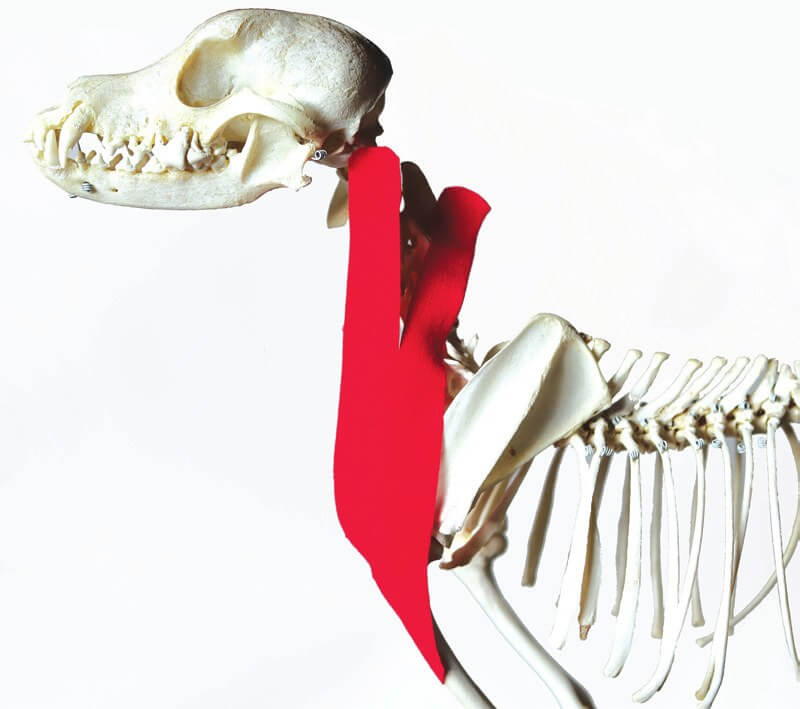
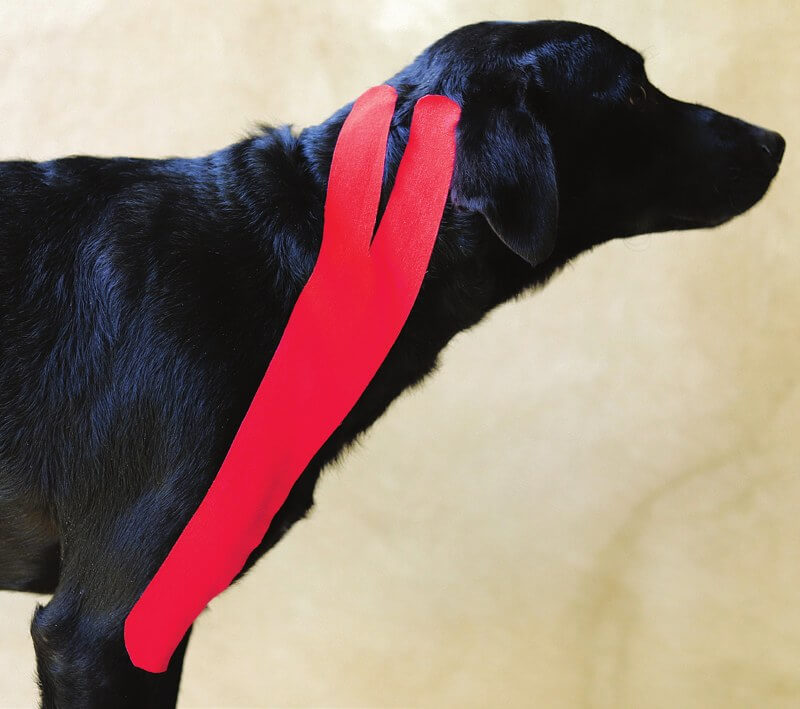
Deltoideus
Covers the point of the shoulder. Taping here can support shoulder stability or facilitate the muscle’s role in flexing the shoulder joint.
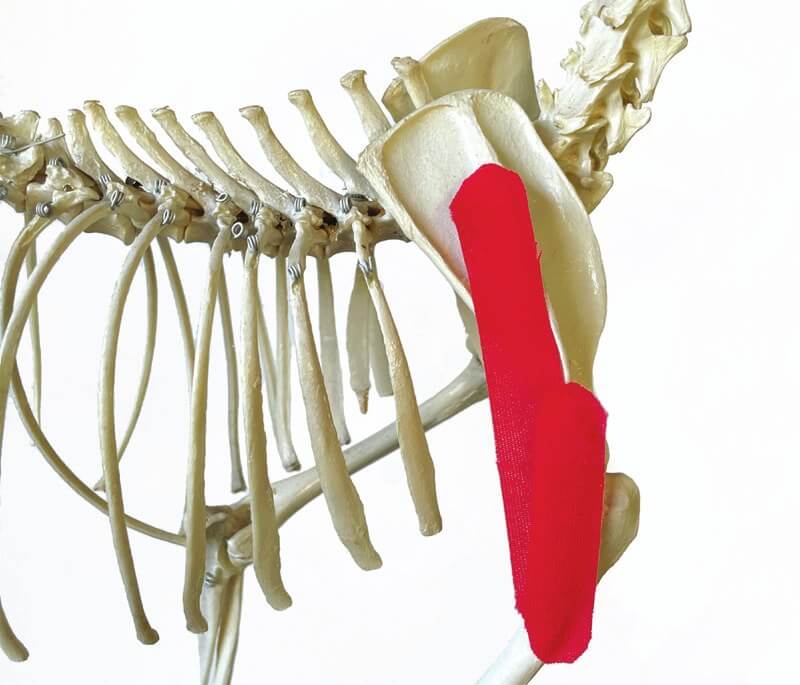
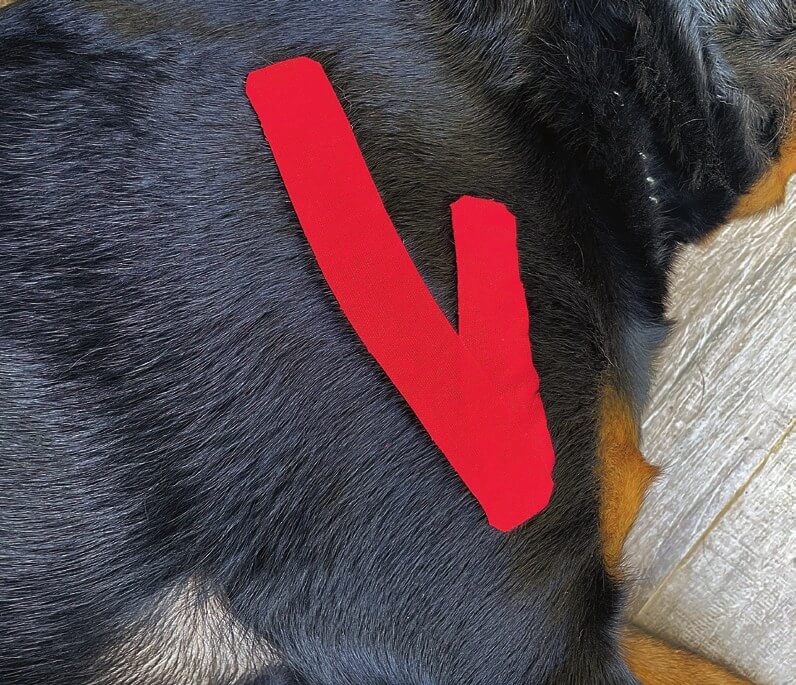
Latissimus dorsi
A broad muscle spanning from the thoracolumbar region to the humerus. Taping can support the flank and assist the muscle’s role in retracting the forelimb.
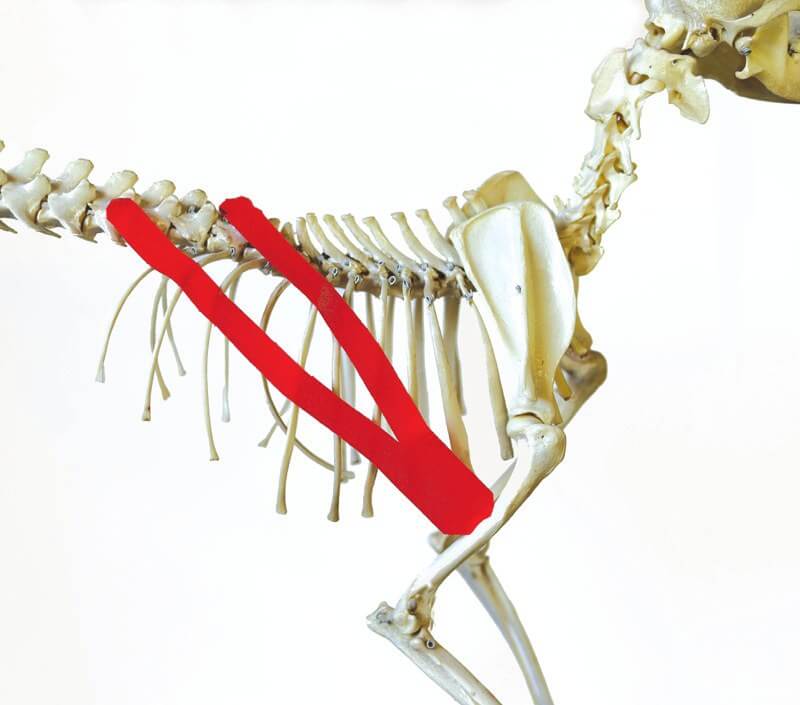
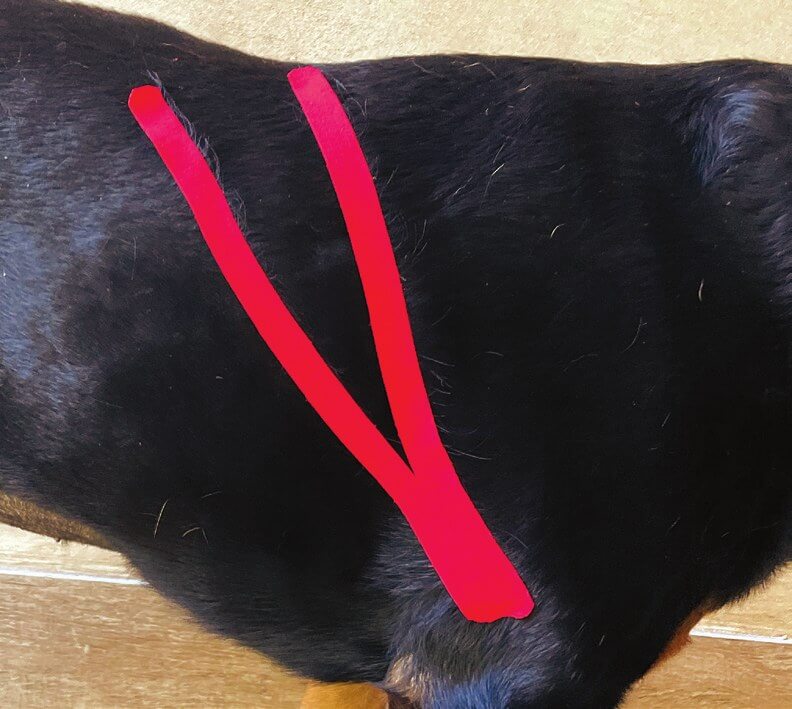
Triceps brachii
Runs down the back of the upper foreleg, over the elbow. Taping supports elbow extension and can help with forelimb weakness or instability.
Supraspinatus
Sits over the front edge of the shoulder blade. Taping here is often used to support shoulder stability and comfort during movement.
Infraspinatus
Sits just behind the supraspinatus, over the body of the shoulder blade. Taping supports shoulder stability, particularly its role in outward rotation of the joint.
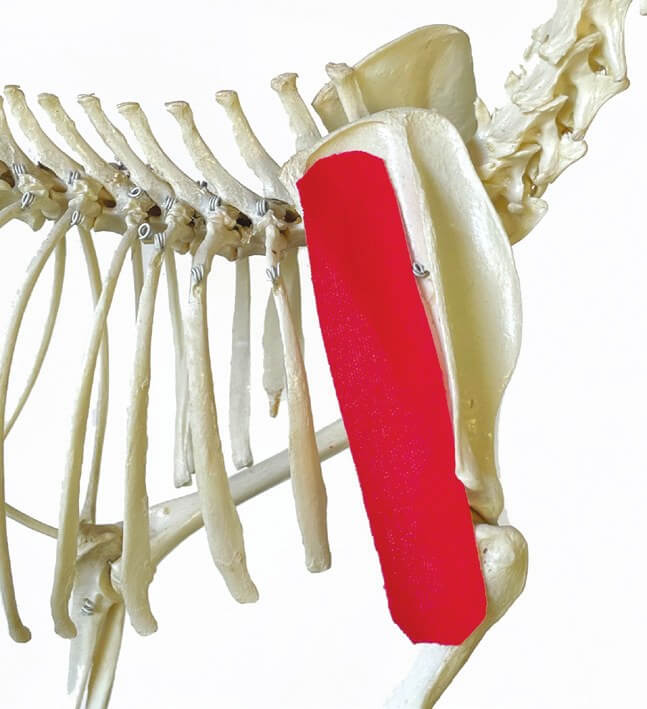
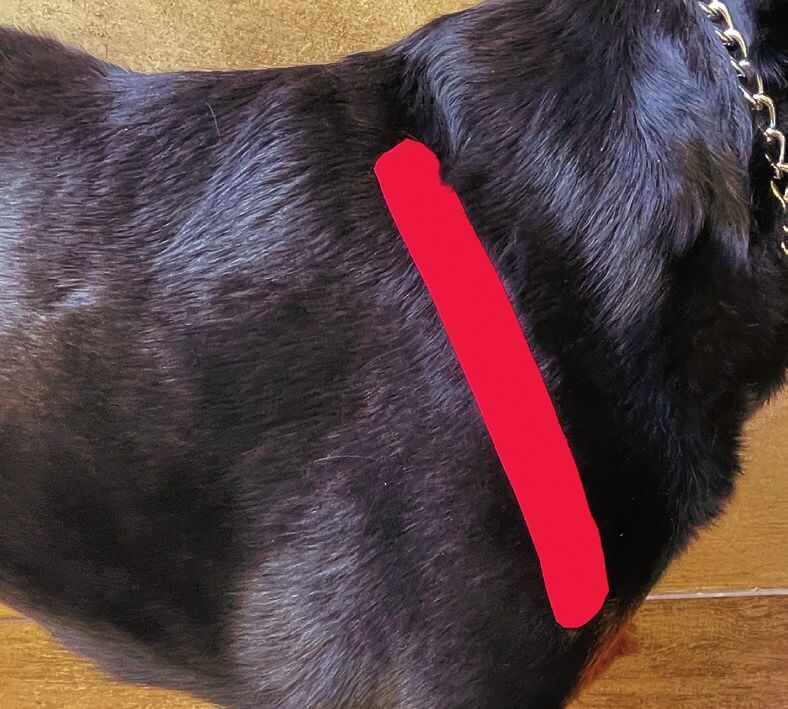
Gastrocnemius
Runs down the back of the hind leg to the common calcaneal (Achilles) tendon. Taping supports the calf and can assist hock stability.
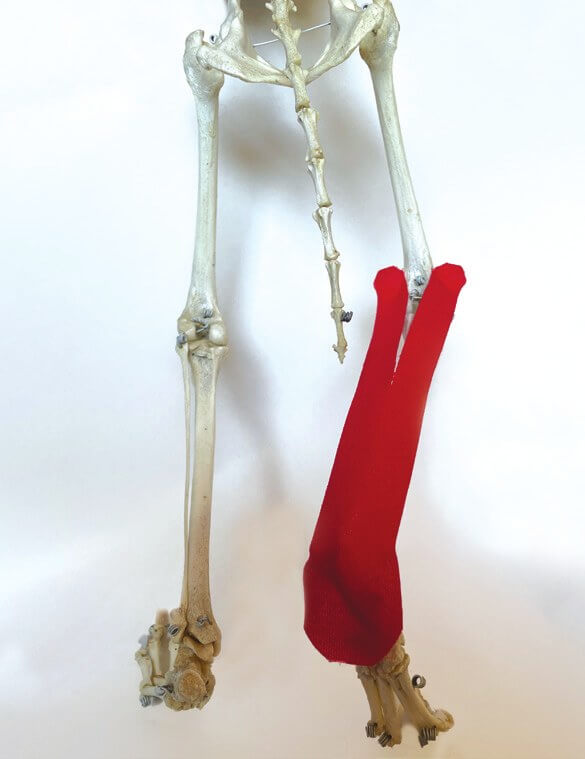
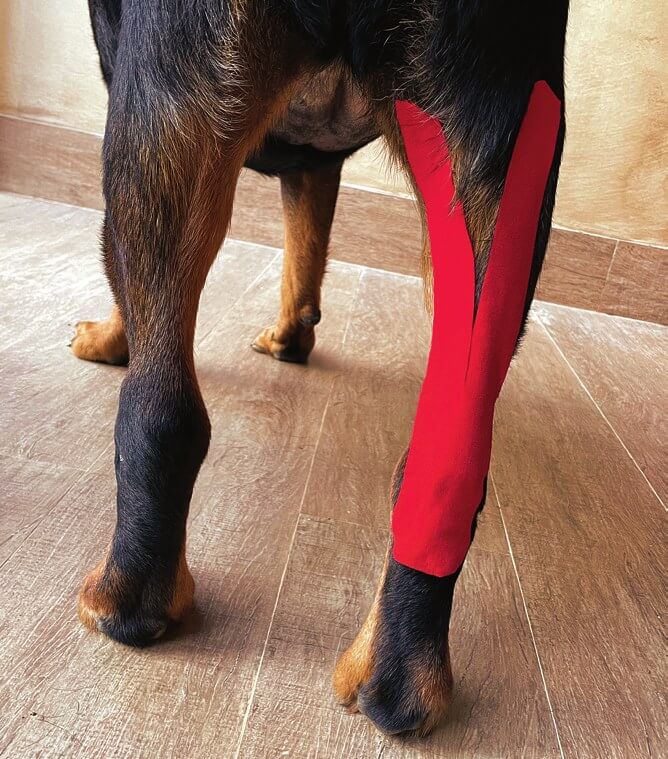
Quadriceps
Covers the front of the thigh, playing a key role in extending the knee and maintaining patellar position. Taping is often used for support after knee injuries or patellar luxation.
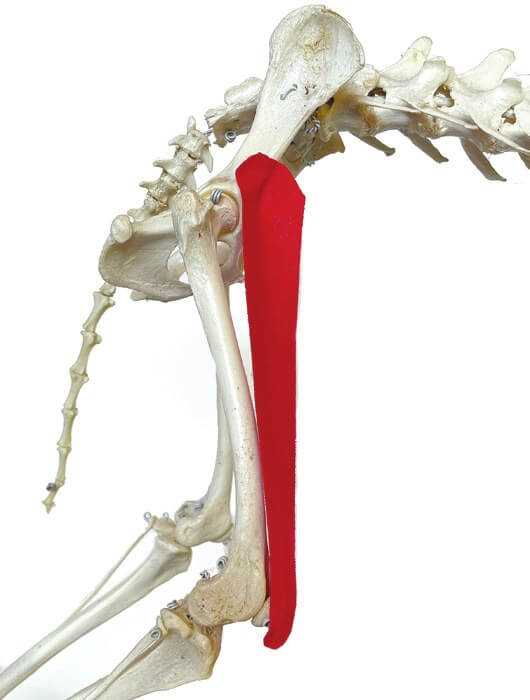
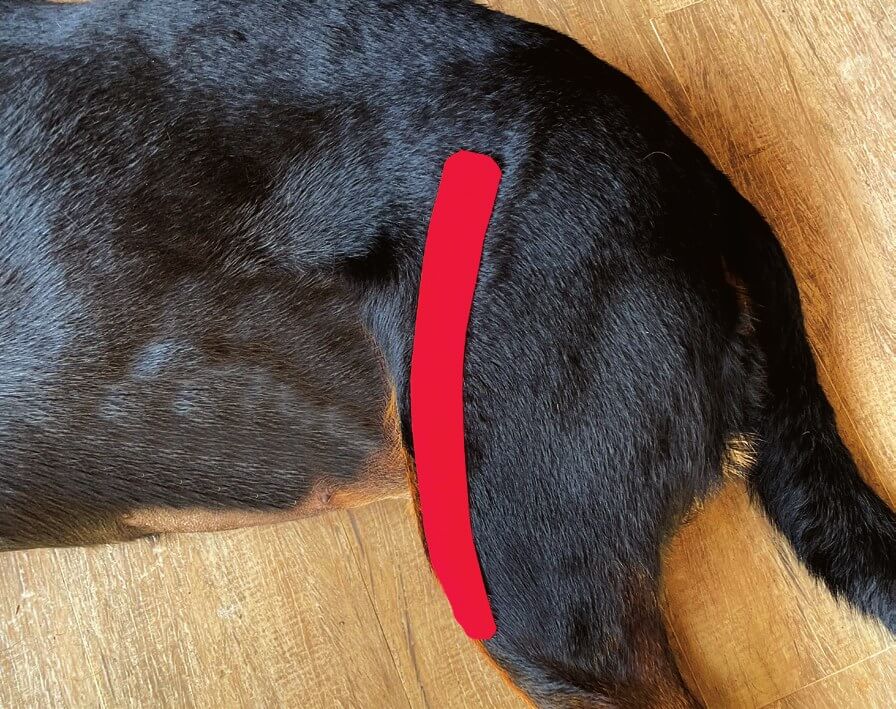
Important precautions
- Identify whether the goal is to facilitate a weak muscle or relax a tight one before choosing the taping direction – applying it the wrong way round can work against the intended effect.
- Have any persistent muscle weakness, pain or asymmetry assessed by a veterinarian or canine physiotherapist first.
- Check the skin is clean, dry and free of irritation before applying tape.
More information:
Please note that applications provided on our website are not clinically proven. All mentioned applications are based on extensive evaluation and case studies with licensed veterinarians and/or canine physiotherapists. Always have the underlying cause of lameness diagnosed by a veterinarian before applying tape.
Attention: Mentioning source is mandatory, when using the content on this page.